Header

Search

Media Release

Zurich, 20 March 2026

UZH Returns Benin Bronzes From Its Ethnographic Museum to Nigeria

The University of Zurich has decided to return 14 objects from its Ethnographic Museum to the Federal Republic of Nigeria. The objects originate from the Kingdom of Benin in what is now Nigeria and hold immense cultural and spiritual value for the people who live there.

In March 2024, Nigeria’s National Commission for Museums and Monuments (NCMM) filed a formal restitution claim on behalf of the Nigerian government for 14 Benin artifacts held by the Ethnographic Museum at the University of Zurich (UZH). The University of Zurich has decided to honor this claim.

Responsible approach to objects with a colonial past

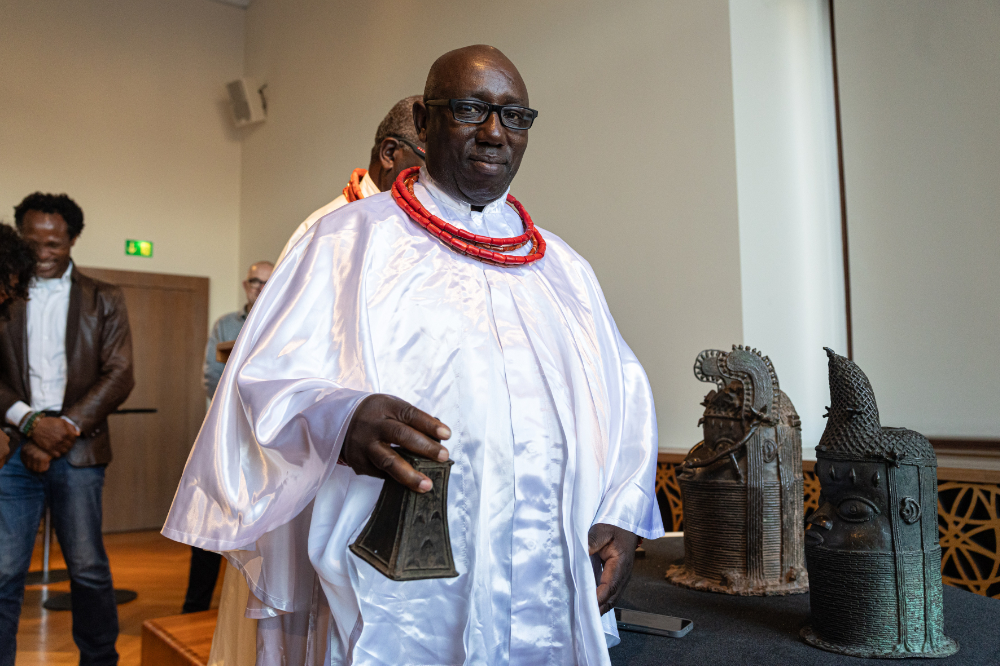
"As a university, we want to critically engage with the origin of cultural property in our collections, and deal with it in a responsible way," says Elisabeth Stark, Vice President Research at UZH. "The provenance research on the Benin Bronzes conducted at the Ethnographic Museum revealed that the majority of these objects had very likely been looted before we came to acquire them. This is why we are handing them back."

To this day, the artifacts in question hold great cultural and spiritual value to the people of Nigeria. NCMM Director General Olugbile Holloway welcomes the decision: "The restitution will go a long way to heal certain aspects of our colonial past. I have no doubt that the Benin Royal Palace, the people of Benin, and all Nigerians truly appreciate the symbolism of this significant return."

The Benin artifacts, which were on display as part of the Benin Dues exhibition at UZH's Ethnographic Museum until 8 March 2026, are currently undergoing comprehensive digitalization. Fourteen of the objects will be transferred to the Nigerian National Museum in Lagos this summer, where they will be handed over to the NCMM, on behalf of the Federal Republic of Nigeria.

Joint restitution with Museum Rietberg and the Musée d’ethnographie de Genève

Significant restitutions of Benin artefacts have been carried out in recent years. In 2022, German museums restituted some 1,100 artifacts to Nigeria, and last year, the Netherlands returned 119 objects. Earlier this year, the University of Cambridge announced that it was transferring ownership of 116 artifacts to Nigeria.

Alongside the UZH Ethnographic Museum, Museum Rietberg and the Musée d’ethnographie de Genève (MEG) will also restitute looted works from the Kingdom of Benin to Nigeria. The directors of these three Swiss museums, Carine Ayélé Durand (MEG), Annette Bhagwati (Museum Rietberg) and Alice Hertzog (UZH Ethnographic Museum), have issued a joint statement:

"Through the Benin Initiative Switzerland, our museums have meticulously investigated the provenance of the works held from Benin, working in close cooperation with our partners in Nigeria. The results leave no doubt: a number of objects reached our collections through the international art market following the British attack on and looting of the Kingdom of Benin in 1897.

Returning the Benin Bronzes to Nigeria makes it possible for the country to independently research, preserve and share its own history. We are responsible for this transfer of ownership as Swiss museums and institutions aware of our ethical responsibilities, actively seeking as we do a dialogue with the societies of origin. This represents a necessary stage in coming to terms with history and acts as a sign of respect, symbolizing international cooperation in action.

On Friday, 20 March 2026, at 5 pm, the three museums will hold a joint media conference in Zurich announcing their decision to transfer ownership and restitute the Benin Bronzes in their collections.

Historical context
In 1897, British troops looted the royal palace in Benin (present-day Nigeria) and stole thousands of artifacts, including relief plaques, depictions of ancestors, and ritual objects. Dubbed the Benin Bronzes, these works were sold to museums and collections around the world via the international art market. Some of the bronze that served as the raw material originated in Europe and was exchanged as part of the transatlantic trade in which Africans were abducted and trafficked to be sold to European slave traders. 


Benin Initiative Switzerland (BIS)
Led by Museum Rietberg, eight Swiss museums came together in 2021 to research the provenance of the works they held from Benin, working in collaboration with partners from Nigeria. In total, 96 works are held by the eight participating museums in German and French-speaking Switzerland, including the Musée d’ethnographie de Genève (nine), Museum Rietberg (16) and the Ethnographic Museum (18). The multi-year research carried out by BIS proved that 14 of the 18 works held by the Ethnographic Museum most likely had been looted and thus warrant restitution. Professor Alice Hertzog, the current director of the UZH Ethnographic Museum, played a key role in the provenance research conducted at all museums involved in the initiative (2021–2024). The research project was supported by the Swiss Federal Office of Culture.

All research findings are publicly accessible at: musethno.uzh.ch/en/bis

Contact

Ethnographic Museum at the University of Zurich
Prof. Dr. Alice Hertzog, director
+41 44 634 90 25
hertzog@vmz.uzh.ch

Media Relations
Universität Zürich
+41 44 634 44 67
mediarelations@kommunikation.uzh.ch

Download (PDF, 117 KB) press release 20.032026

Legal notice

Copyright

All content, text, images, graphics, photographs or other files on our website are protected by copyright. They belong exclusively to the University of Zurich or to the expressly named copyright holders. The use of any elements – in particular commercial use – by third parties is prohibited unless the express written consent of the copyright holder has been obtained or obtained in advance from third parties. The mere downloading or copying of content, text, images, graphics, photographs or other files does not transfer any rights.

Permission of use for media representatives

The image files, graphics or photographs expressly designated as "press pictures" on our website may be used exclusively by media representatives (free of charge), provided that the media coverage is in connection with a past, current or future exhibition. The aforementioned use must necessarily include the following photo credit: © Völkerkundemuseum der Universität Zürich, photographer: respective surname, first name. Any other use is prohibited.

Additional Information

Images

Director General NCMM Olugbile Holloway and Vice President UZH Christian Schwarzenegger. Photo: Museum Rietberg, Matthias Willi, 2026.

Selection of Restituted Objects

More about Selection of Restituted Objects

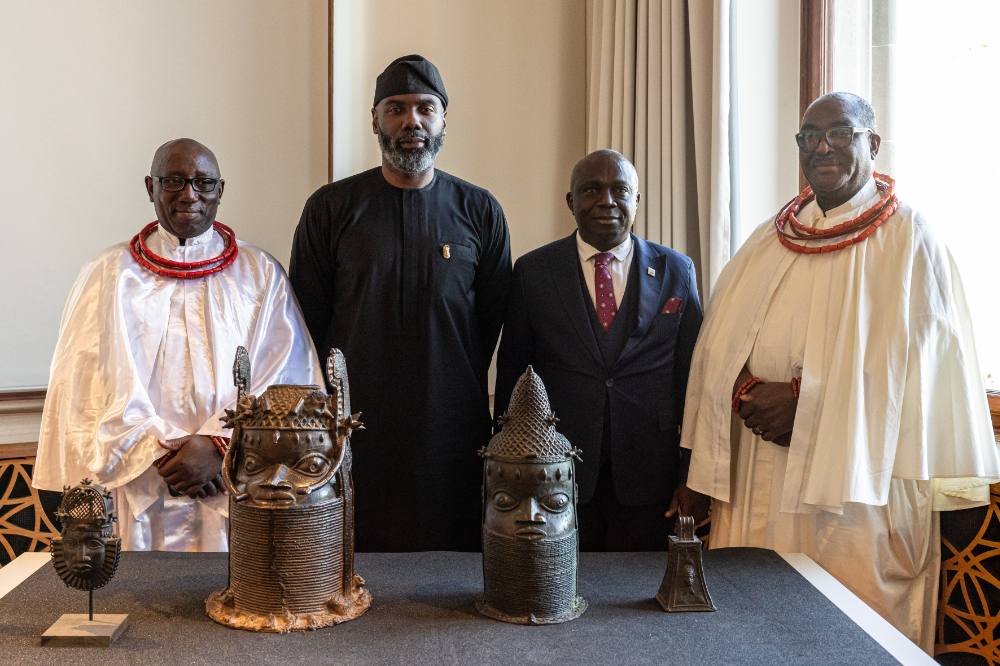
Director General NCMM Olugbile Holloway, Legal Adviser Babatunde Adebiyi (NCMM) and two Representatives of the Royal Palace. Photo: Museum Rietberg, Matthias Willi, 2026.

Director General National Commission for Museums and Monuments NCMM. Photo: Museum Rietberg, Matthias Willi, 2026.

Director General of National Commission of Museums and Monuments NCMM. Photo: Museum Rietberg, Matthias Willi, 2026.

Vertreter Nigeria und Palast

More about Vertreter Nigeria und Palast

From left to right: Chief Nosakhare Nelson Agbonif, Director General NCMM Olugbile Holloway, Legal Adviser NCMM Babatunde Adebiyi, Chief Osas Gabriel Edebor-Asuen. Photo: Museum Rietberg, Matthias Willi, 2026.

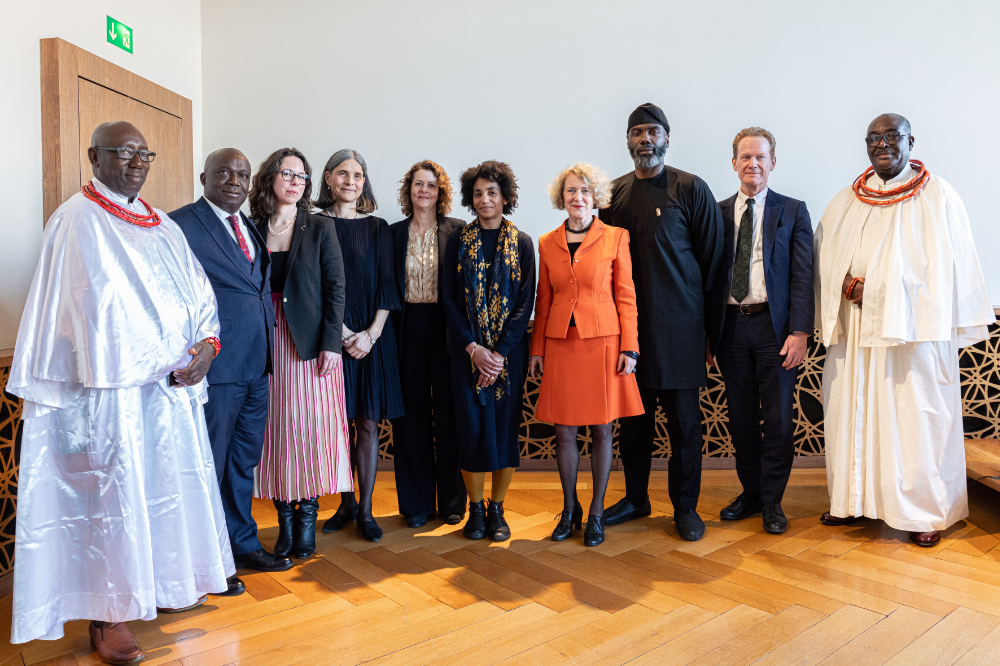
From left to right: Chief Nosakhare Nelson Agbonif, Babatunde Adebiyi (Legal Adviser NCMM ), Alice Hertzog (director Ethnographic Museum UZH), Annette Bhagwati (director Museum Rietberg), Joëlle Bertossa (Councellor Geneva), Carine Ayélé Durand (dirrector MEG), Corine Mauch (mayor Zurich), Olugbile Holloway (director general NCMM), Christian Schwarzenegger (vice president UZH), Chief Osas Gabriel Edebor-Asuen. Photo: Museum Rietberg, Matthias Willi, 2026.

Director General NCMM Olugbile Holloway signs the contract; on the right Legal Adviser NCMM Babatunde Adebiyi, on the left Chief Osas Gabriel Edebor-Asuen. Photo: Museum Rietberg, Matthias Willi, 2026.

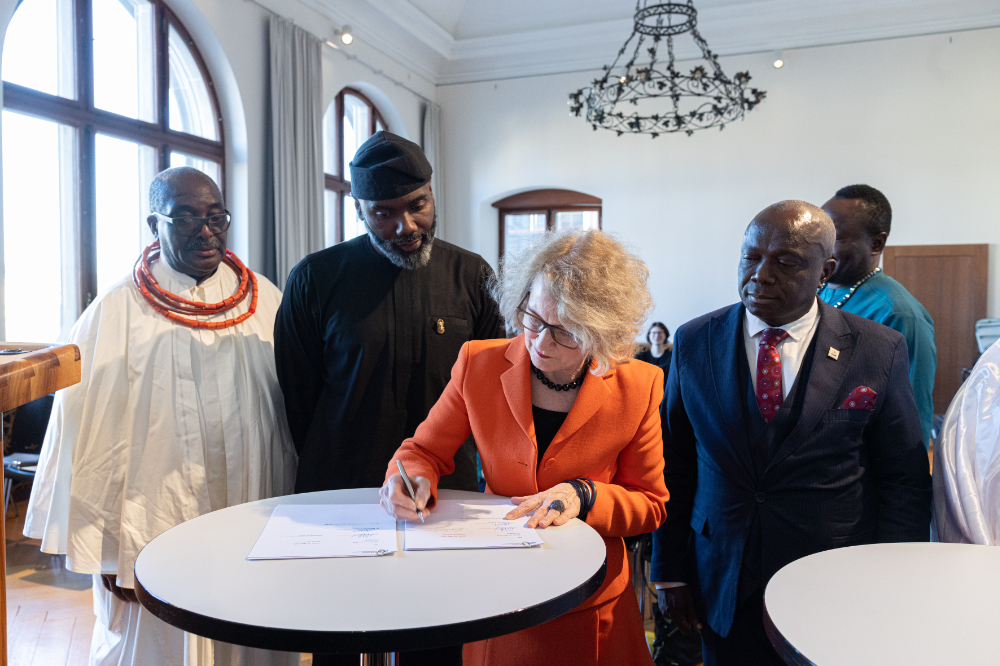
Mayor Corine Mauch signs the contract. On the left Chief Osas Gabriel Edebor-Asuen and Director General NCMM Olugbile Holloway, on the right Legal Adviser NCMM Babatunde Adebiyi. Photo: Museum Rietberg, Matthias Willi, 2026.

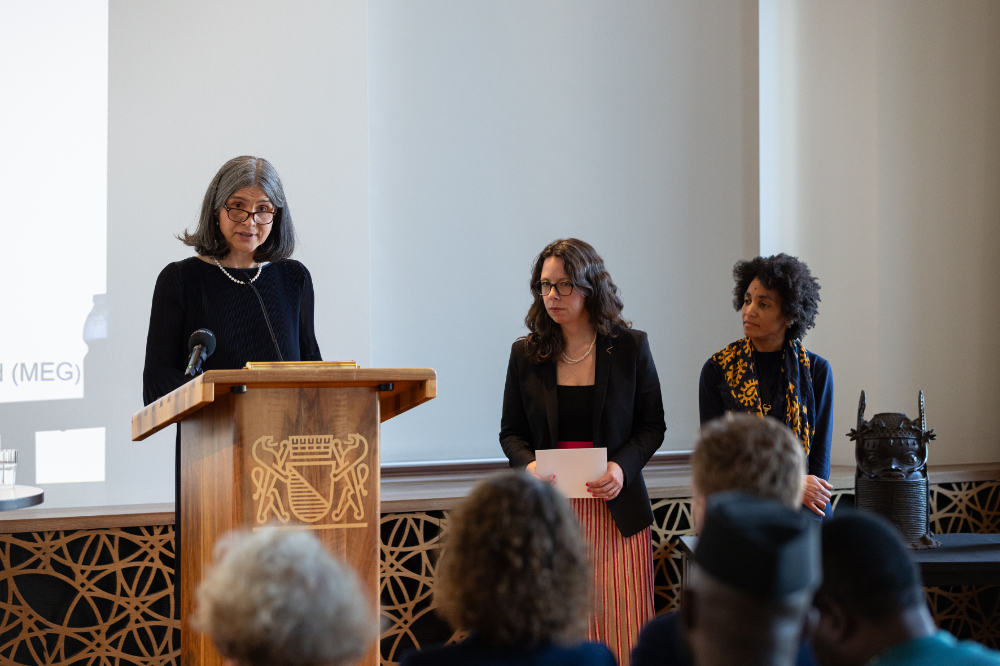
From left to right: Annette Bhagwati (Museum Rietberg), Alice Hertzog (Ethnographic Museum UZH), Carine Ayélé Durand (Musée d'ethnographie de Genève MEG). Photo: Museum Rietberg, Matthias Willi, 2026.

Chief Nosakhare Nelson Agbonifi

More about Chief Nosakhare Nelson Agbonifi

Representative of the Royal Palace. Photo: Museum Rietberg, Matthias Willi, 2026.

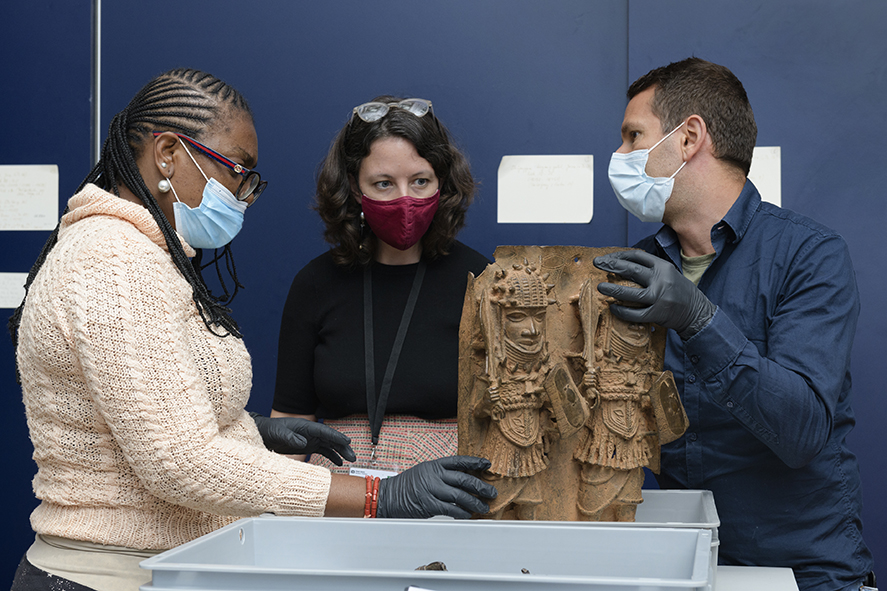
Nigerian historian Enibokun Uzebu-Imarhiagbe examines objects from the Kingdom of Benin with Alice Hertzog and Alexis Malefakis. Photo: Kathrin Leuenberger, 2021.

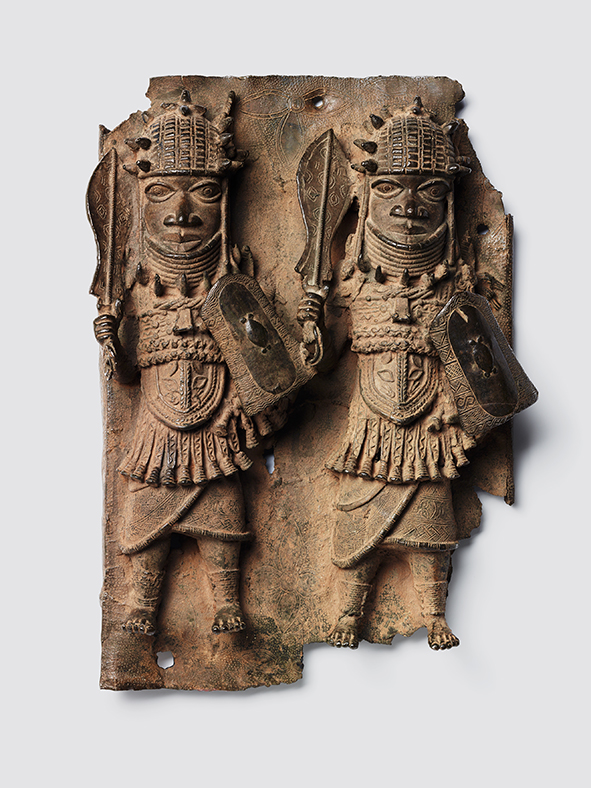
This relief panel depicts Oba twins, i.e. two royal figures. British troops probably looted the panel in 1897 during their attack on the Kingdom of Benin in what is now Nigeria. Inv. No.: VMZ 10 004. Photo: Kathrin Leuenberger, 2024.

Reiterfigur aus dem Königtum Benin

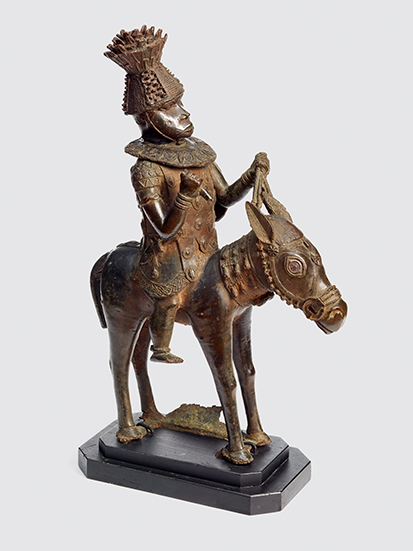
Rider from the Kingdom of Benin

More about Rider from the Kingdom of Benin

The head attached here does not actually belong to the figure. It is a replica of a head in the British Museum. It is unknow where the original head is and how the rider lost it. Inv.-Nr.10007; Photo: Kathrin Leuenberger, 2024.

The Uhunmwu-Ẹkuẹ (pendant mask) from the Kingdom of Benin was probably looted during the British colonial war in 1897 and came into the collection of the Ethnographic Museum via the Swiss collector Han Coray. Inv. No. 10009; Photo: Kathrin Leuenberger, 2021.

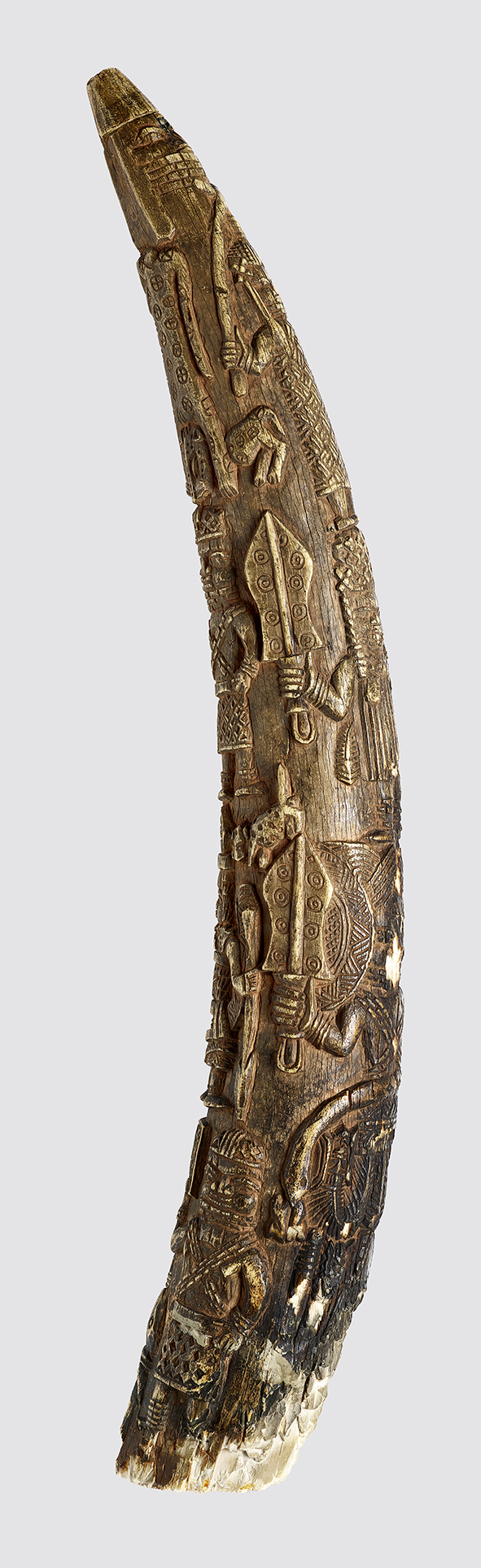
These Aken'ni Elao were used in the Kingdom of Benin (Nigeria) together with so-called memorial heads of deceased kings on ancestral altars. When the British plundered Benin in 1897, they separated the tusks from the corresponding memorial heads. This Aken'ni Elao has burn marks on its lower end, evidence of the plundering. Inv. no. VMZ 10 013. Photo: Kathrin Leuenberger, 2025.

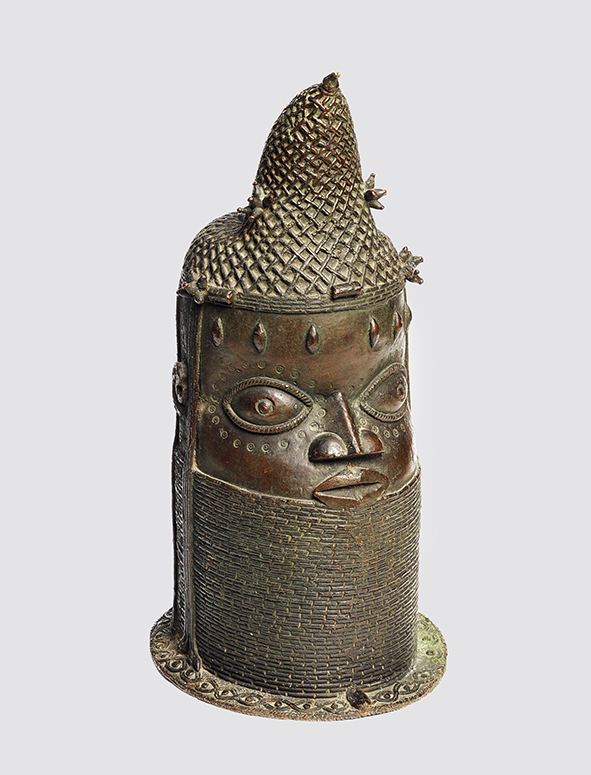
The Iy’Ọba (Queen Mother) is an important figure in the political hierarchy of the Kingdom of Benin in present-day Nigeria. Such Uhunmwu elao ọghe Iy’ọba stood on the ancestral altar in the shrine of a Queen Mother and served to maintain daily contact with the ancestor. This commemorative head was probably looted by British troops in 1897. It entered the collection of the University of Zurich in 1940 via the art trade. Inv. No. VMZ 10 002. Photo: Kathrin Leuenberger, 2024.